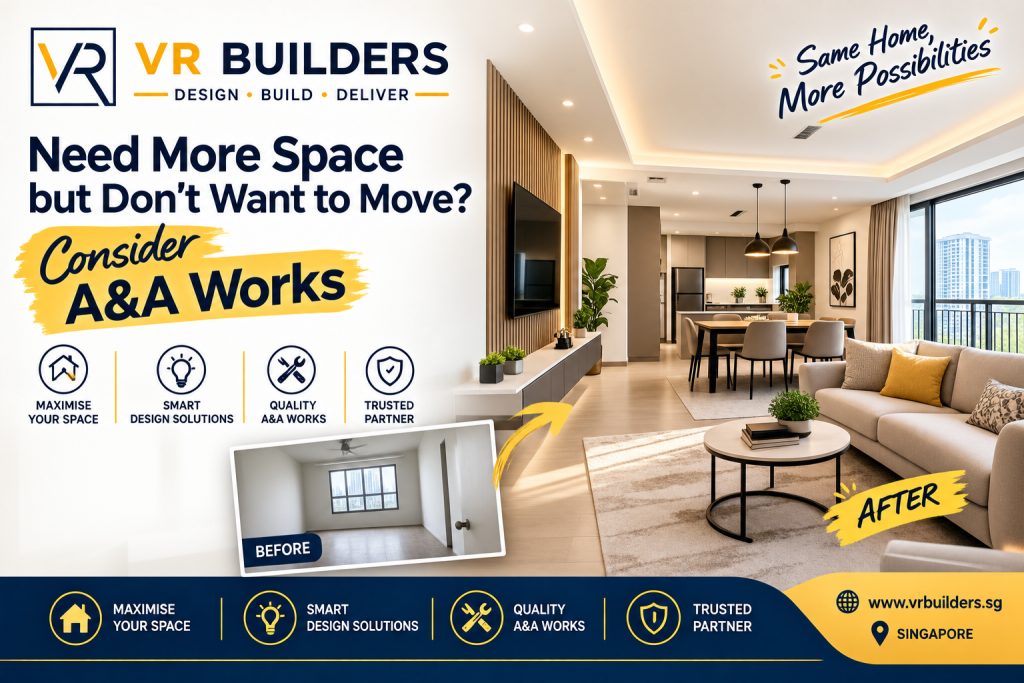
The kids are sharing a room and running out of patience with each other. Your parents might move in next year. Working from home means someone takes calls at the dining table. The obvious answer is a bigger place, but you like your street, the school is close and the thought of selling, buying and paying stamp duty all over again is not appealing.
For many Singapore homeowners, especially those in landed property, there’s another option worth looking at: Addition and Alteration (A&A) works. Here’s what that means, when it makes sense, and what to check before you commit.
What Are A&A Works?
A&A works are structural or significant architectural changes made to an existing building. In a home, that could mean adding a room, extending the rear of a house, adding a storey or reconfiguring the layout by altering walls.
This goes beyond a typical renovation. Standard home renovation services focus on finishes, carpentry and fittings. A&A works change the building itself, so they usually involve engineering input and, in many cases, approval from the authorities before any construction begins.
Why More Singapore Homeowners Consider A&A Works
The reasons are usually practical rather than cosmetic:
- Growing families that need another bedroom or a larger common area
- Multi-generational living, such as a ground-floor room for elderly parents
- Working from home, where a proper study has become a daily need
- Poor layouts in older houses, with dark corridors or small, closed-off kitchens
- Changing lifestyles, where the home no longer fits how the family actually lives
In each case, the family likes the location. The house just doesn’t work as well as it used to.
What Can Addition & Alteration Works Include?
Depending on the property, A&A works may include:
- Rear or side extensions to enlarge living, dining or kitchen areas
- Additional rooms or an extra storey, where planning rules allow
- Roof changes or attic conversions
- Removing or modifying walls, including load-bearing ones with proper engineering
- Balcony or yard enclosures in condominiums, within URA and MCST guidelines
What’s possible for your home depends on its structure, land size, existing approvals and the planning controls that apply to it. Two terrace houses on the same street can have different options, so feasibility needs to be assessed case by case.
A&A Works vs Moving to a Bigger Home
Neither option is automatically cheaper or better. The right choice depends on your circumstances.
A&A works may suit you if:
- You’re attached to the location, schools or neighbours
- Your property has room to extend or reconfigure
- You plan to stay for many years
- You can manage living elsewhere, or around the works, during construction
Moving may suit you better if:
- The space you need can’t realistically be created in your current home
- You’d prefer to avoid construction disruption and approval timelines
- Your long-term plans point to a different area or property type
Compare both paths properly: the cost of the works, temporary accommodation and approval time on one side, and transaction costs, fees and a new location on the other.
What to Consider Before Starting A&A Work in Singapore
Before committing, think through the following:
- Scope of work: what you need the extra space to do, not just how big it should be
- Existing condition: older houses may need repairs before anything can be added
- Structural considerations: whether the existing foundations and structure can take the change
- Approvals: structural works in Singapore generally need plans prepared by a Qualified Person (QP), a registered architect or professional engineer, and approval from BCA. Changes affecting a building’s use, external appearance or floor area may also need URA planning permission. Condo owners will usually need MCST approval as well.
- Timeline: design, submissions and approvals add time before work starts on site
- Budget: allow a buffer for issues discovered once work begins
Why Choosing the Right A&A Contractor Matters
A&A works involve more risk than cosmetic renovation. Mistakes in structural work are expensive to fix, and works carried out without the required approvals can cause problems when you later sell, insure or modify the property.
An experienced addition alteration contractor in Singapore coordinates the QP, the authority submissions and the trades on site, so the building is constructed according to the approved plans. That coordination is much of what you’re paying for.
How to Choose a Suitable A&A Contractor in Singapore
When comparing firms, check for:
- Relevant experience with A&A projects similar to yours, not just interior renovation
- Proper registration, such as BCA registration for the type of works involved
- A clear scope and itemised quotation that separates structural, finishing and submission costs
- Understanding of approvals, including who engages the QP and handles submissions
- A realistic plan and schedule, with one point of contact
A licensed A&A works contractor in Singapore should be able to explain the approval process for your specific property and show you past work. Reviewing a contractor’s project portfolio and registrations and certifications is a sensible first step.
Planning Your A&A Project
Most addition alteration work in Singapore follows a similar path:
- Identify the need. Be specific: one more bedroom, a bigger kitchen or a ground-floor suite.
- Discuss requirements. Share your goals, budget and timeline with a contractor or designer.
- Assess feasibility. A site assessment and QP review determine what the structure and regulations allow.
- Design and submit. Plans are prepared and submitted for the required approvals.
- Build and hand over. Works proceed according to the approved plans, followed by inspection and handover.
Why Consider VR Builders for Your A&A Project?
VR Builders is a BCA-registered contractor that handles A&A works for landed homes, condominiums, and commercial and industrial properties. The team engages the necessary QPs, manages URA and BCA submissions, and runs construction under one project manager, as outlined on the addition and alteration works page. If you’re weighing up options, a site assessment is a practical way to find out what’s feasible before making any decision. The same team also carries out reinstatement works for commercial and office units.
Frequently Asked Questions About A&A Works in Singapore
What are A&A works in Singapore?
A&A (Addition and Alteration) works are structural or significant architectural changes to an existing building, such as extensions, extra rooms, roof changes or wall modifications.
When should I consider A&A works instead of moving?
Consider A&A works when you like your location, plan to stay long term, and your property can realistically be extended or reconfigured.
Can A&A works add more living space to an existing home?
Often, yes, through extensions, extra storeys or better use of existing space. What’s possible depends on the property’s structure and applicable planning controls.
Do A&A works require approvals?
Many do. Structural works generally need QP-prepared plans and BCA approval, and some changes need URA planning permission. Condo works usually also need MCST approval.
How long can A&A works take?
It depends on the scope, design time and approval process. Ask your contractor for a schedule covering both approvals and construction.
How do I choose an A&A contractor in Singapore?
Look for relevant A&A experience, proper registration, a clear itemised quotation and a sound understanding of the approval process.